According to the FDA, the Federal government estimates that there are about 48 million cases of foodborne illness (food poisoning) annually – that’s about 1 in 6 Americans each year. Each year, these illnesses result in an estimated 128,000 hospitalizations and 3,000 deaths. September is Food Safety Education Month and the perfect time for families to learn healthy habits to avoid you and your family getting sick.
 This is Public Health is brought to you in partnership with the Tuscarawas County Health Department.
Safe Food Handling
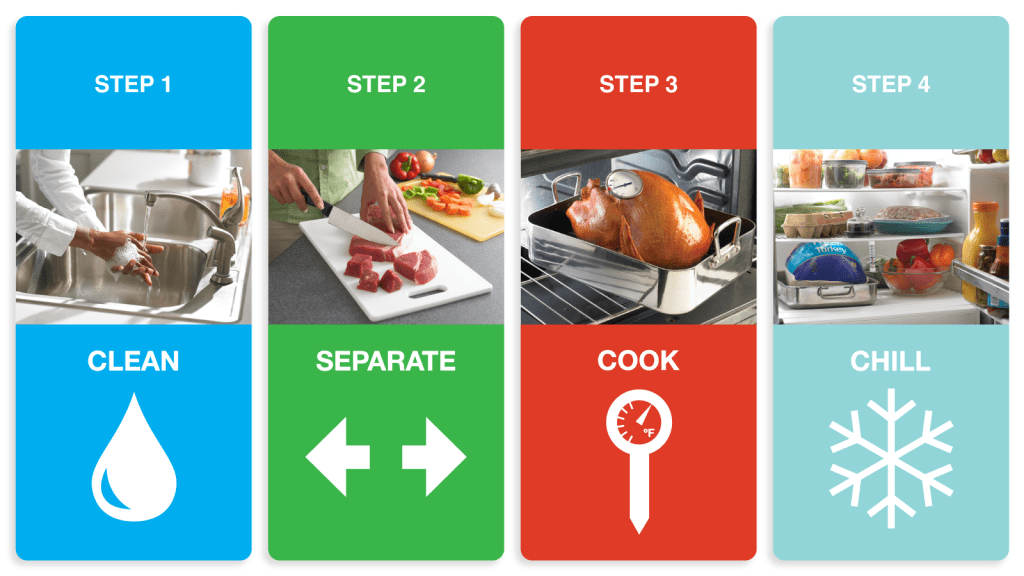
CLEAN
Wash hands and surfaces often
- Wash your hands with warm water and soap for at least 20 seconds before and after handling food and after using the bathroom, changing diapers, and handling pets.
- Wash your cutting boards, dishes, utensils, and counter tops with hot soapy water after preparing each food item.
- Consider using paper towels to clean up kitchen surfaces. If you use cloth towels, launder them often in the hot cycle.
- Rinse fresh fruits and vegetables under running tap water, including those with skins and rinds that are not eaten. Scrub firm produce with a clean produce brush.
- With canned goods, remember to clean lids before opening.
SEPARATE
Separate raw meats from other foods
- Separate raw meat, poultry, seafood, and eggs from other foods in your grocery shopping cart, grocery bags, and refrigerator.
- Use one cutting board for fresh produce and a separate one for raw meat, poultry, and seafood.
- Never place cooked food on a plate that previously held raw meat, poultry, seafood, or eggs unless the plate has been washed in hot, soapy water.
- Don’t reuse marinades used on raw foods unless you bring them to a boil first.
COOK
Cook to the right temperature
- Color and texture are unreliable indicators of safety. Using a food thermometer is the only way to ensure the safety of meat, poultry, seafood, and egg products for all cooking methods. These foods must be cooked to a safe minimum internal temperature to destroy any harmful bacteria.
- Cook eggs until the yolk and white are firm. Only use recipes in which eggs are cooked or heated thoroughly.
- When cooking in a microwave oven, cover food, stir, and rotate for even cooking. If there is no turntable, rotate the dish by hand once or twice during cooking. Always allow standing time, which completes the cooking, before checking the internal temperature with a food thermometer.
- Bring sauces, soups and gravy to a boil when reheating.
CHILL
Refrigerate foods promptly
- Use an appliance thermometer to be sure the temperature is consistently 40° F or below and the freezer temperature is 0° F or below.
- Refrigerate or freeze meat, poultry, eggs, seafood, and other perishables within 2 hours of cooking or purchasing. Refrigerate within 1 hour if the temperature outside is above 90° F.
- Never thaw food at room temperature, such as on the counter top. There are three safe ways to defrost food: in the refrigerator, in cold water, and in the microwave. Food thawed in cold water or in the microwave should be cooked immediately.
- Always marinate food in the refrigerator.
- Divide large amounts of leftovers into shallow containers for quicker cooling in the refrigerator.
High Risk Populations
Some people are more at-risk than others for food poisoning. This includes pregnant women, their unborn babies, and children. Older Adults and People with Cancer, Diabetes, HIV/AIDS, Organ Transplants, and Autoimmune Diseases are also more susceptible.
If you are at greater risk of foodborne illness, you are advised not to eat:
- Raw or undercooked meat or poultry.
- Raw fish, partially cooked seafood (such as shrimp and crab), and refrigerated smoked seafood.
- Raw shellfish (including oysters, clams, mussels, and scallops) and their juices.
- Unpasteurized (raw) milk and products made with raw milk, like yogurt and cheese.
- Soft cheeses made from unpasteurized milk, such as Feta, Brie, Camembert, blue-veined, and Mexican-style cheeses (such as such as Queso Fresco, Panela, Asadero, and Queso Blanco).
- Raw or undercooked eggs or foods containing raw or undercooked eggs, including certain homemade salad dressings (such as Caesar salad dressing), homemade cookie dough and cake batters, and homemade eggnog.
NOTE: Most pre-made foods from grocery stores, such as Caesar dressing, pre-made cookie dough, or packaged eggnog are made with pasteurized eggs.
- Unwashed fresh vegetables, including lettuce/salads.
- Unpasteurized fruit or vegetable juices (these juices will carry a warning label).
- Hot dogs, luncheon meats (cold cuts), fermented and dry sausage, and other deli-style meats, poultry products, and smoked fish — unless they are reheated until steaming hot.
- Salads (without added preservatives) prepared on site in a deli-type establishment, such as ham salad, chicken salad, or seafood salad.
- Unpasteurized, refrigerated pâtés or meat spreads.
- Raw sprouts (alfalfa, bean, or any other sprout).


Foodborne Illness: Know the Symptoms
Symptoms of foodborne illness usually appear 12 to 72 hours after eating contaminated food but may occur between 30 minutes and 4 weeks later. Symptoms include:
- Nausea, vomiting, diarrhea (may be bloody), and abdominal pain
- Fever, headache, and body ache
If you suspect that you could have a foodborne illness, contact your physician or health care provider right away!