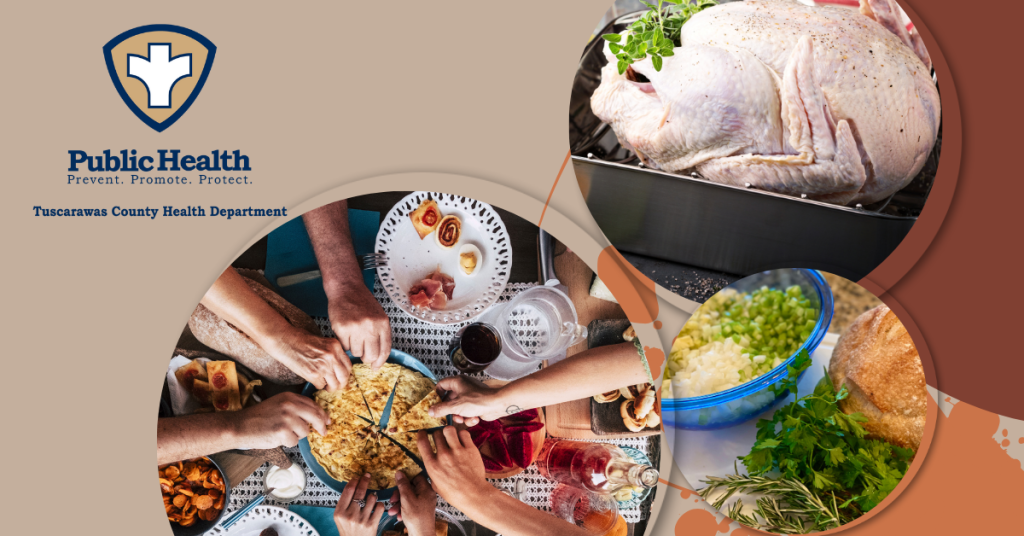
Thanksgiving is a time for gathering with friends and family to share delicious food and create lasting memories. Taking a moment to prioritize food safety is the best way to ensure everyone enjoys the holidays without running into any health issues. Here are a few tips to keep your Thanksgiving feast safe and enjoyable.
These food safety tips for your holiday season are brought to you in partnership with the Tuscarawas County Health Department.
#1 Clean Prep
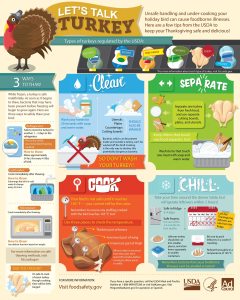
Your first line of defense when it comes to avoiding foodborne illness is to ensure both your hands and prep area are nice and clean. Wash your hands thoroughly with soap and water before any food prep and always after handling any raw meat. Be mindful that surfaces have been both cleaned and sanitized before cooking and again, after the contamination by any raw meat.
#2 The Bird
The turkey is the star of the show in many households, but the proper handling of the bird is crucial to avoid bringing harmful food-borne bacteria to the table. Leaving any frozen package of meat out on the counter for more than two hours can be harmful. Here are two foolproof ways to safely thaw your turkey.
- Refrigerator Thawing: To thoroughly thaw, your turkey will need roughly 24 hours for every five pounds. Once it’s thawed, the turkey is safe to stay in the fridge for one to two days.
- Cold Water Thawing: When using the cold-water thawing method, you’ll want to allow 30 minutes per pound. Submerge the turkey in its original packaging to avoid cross-contamination and change the water every half hour. If you use this method, it’s best to cook your turkey as soon as it has finished thawing.
Once thawed, safe cooking requires an environment that is 325 degrees or higher. Whether you’re using a good old fashion oven, an electric roaster oven or frying it, your turkey’s internal temperature must reach 165 degrees. When temping your bird, the USDA recommends checking the internal temperature in three separate places, using a food thermometer.
#3 Keep it Separate
Cross contamination in the kitchen is an easy way to spread bacteria. To avoid the transfer of bacteria from your raw meat to your raw veggies, keep a separate set of cutting boards and utensils for each. Ready-to-eat foods should never come into contact with the same surfaces as raw meat.
#4 Storing Leftovers
Thanksgiving dinner is almost even better repurposed the next day or two. When you pack up your leftovers, remember they must be stored in the refrigerator and you’ll want to enjoy them within four days.
It’s always better to play it safe. If you have any questions regarding the safe handling or preparation of your family’s thanksgiving dinner, reach out to the Tuscarawas County Health Department at 330-343-5550 or eh@tchdnow.org