
In Massillon Ohio, local students are taking action. Worm composting, a pollinator garden, large scale paper recycling and plans to expand their efforts.
Planet Protectors is brought to you in partnership with the Stark Tuscarawas Wayne Recycling District
“They are an active group of kids that want to do something to make the world a better place” -Ann Palaski, teacher of Science, Energy and the Environment at Washington High School.
Worm Composting
What started as a worm composting lab in a college level course has turned into a larger scale vermicomposting project that feeds a pollinator garden and keeps a large amount of the school’s food waste out of the landfill!
The semester-long worm composting project is where it all started. The class is broken down into groups who each have a composting bin. They start with a cup of soil for microbes, water and worms. Then add food scraps, keep it moist and tend to the worms. At the end of the semester, they measure the mass of their worms. “It’s like a competition to grow the most worms” -Ann
While the composting lab is a great project and very educational, they found that the cafeteria was producing 5x more waste then they were able to use during that semester. So they sought to expand the project.
From Cafeteria Waste to Butterfly Gardens
While participating in the Master Recycler class back in 2021, Ann learned that food waste makes up a huge part of the material in our landfills. When food is broken down in the landfill it emits methane gas, which is largely effective at trapping heat in the atmosphere. Through composting, food waste can be broken down more productively; reducing greenhouse gasses and providing nutrient rich soil for gardens.
Benefits of using compost
- Supplies beneficial microorganisms to soil
- Improves and stabilizes pH
- Can bind and degrade some pollutants
- Improves soil structure, creating a better environment for plant roots
- Improves water holding capacity
“The WHS cafeteria was so supportive in collecting all of their food waste for us. Those workers are just wonderful.” -Ann Palaski
The food waste collected in the cafeteria is all clean food scraps. All compostable kitchen prep waste, salad bar waste and expired produce are being collected by the cafeteria staff at the highschool. But once that waste is collected and composted, what is done with the compost? That’s where the pollinator garden comes in!

The Pollinator Garden
Realizing the scale of just how much food waste the cafeteria was producing, and wishing to turn that waste into something productive, they sought to expand their efforts.
Palaski applied for the “Putting Down Roots Farm to School Grant” sponsored by the Stark County Educational Service. Once awarded the grant, the students spent time learning about native plants and the importance of pollinators.
“We learned that 90% of all plants need pollinators, how monoculture lawns are like asphalt to pollinators. The use of pesticides and fertilizers only further drives their decline. We wanted to move beyond these depressing facts and do something positive” Ann shared.
The students helped identify which species were most beneficial to butterflies and bees. Then they used the grant to purchase those native plants. The pollinator garden has been going strong since it was planted in the spring. More waste will be collected as the school year begins and will continue to feed the garden, which will feed local pollinators!
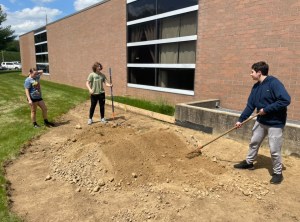

Additional Efforts
Also at WHS, led by teacher Ann Palaski, is the Environmental Club. For over a decade, the environmental club has carried out a paper recycling program with the support of the Stark-Tusc-Wayne recycling district. Ann explained that the recycling district supplies all of the bins, rolling bins, and the outdoor dumpster. While the students do the pick up throughout the school. Furthermore, they are currently working to expand the recycling program to reach more buildings in the Massillon City Schools District.
In more areas than one, these rock stars at Washington Highschool are receiving hands-on training on how to make a real difference in our environment- and making a real difference while they’re at it!
The Recycling District assures safe and sanitary disposal of solid waste for the residents of Stark, Tuscarawas, and Wayne Counties. Their goal is to reduce reusable or renewable wastes from entering landfills within the district. The Solid Waste District accomplish this through the development of residential and industrial programs that educate, promote, provide, implement, and improve recycling opportunities that will preserve landfill space now and into the future. Visit www.timetorecycle.org for more information.

Reporting, Alyssa Harbold
Sources:Ann Palaski- teacher of Science, Energy and the Environment at Washington Highschool (Massillon City Schools, Ohio.)
https://www.usda.gov/foodlossandwaste/why
https://www.epa.gov/lmop/basic-information-about-landfill-gas