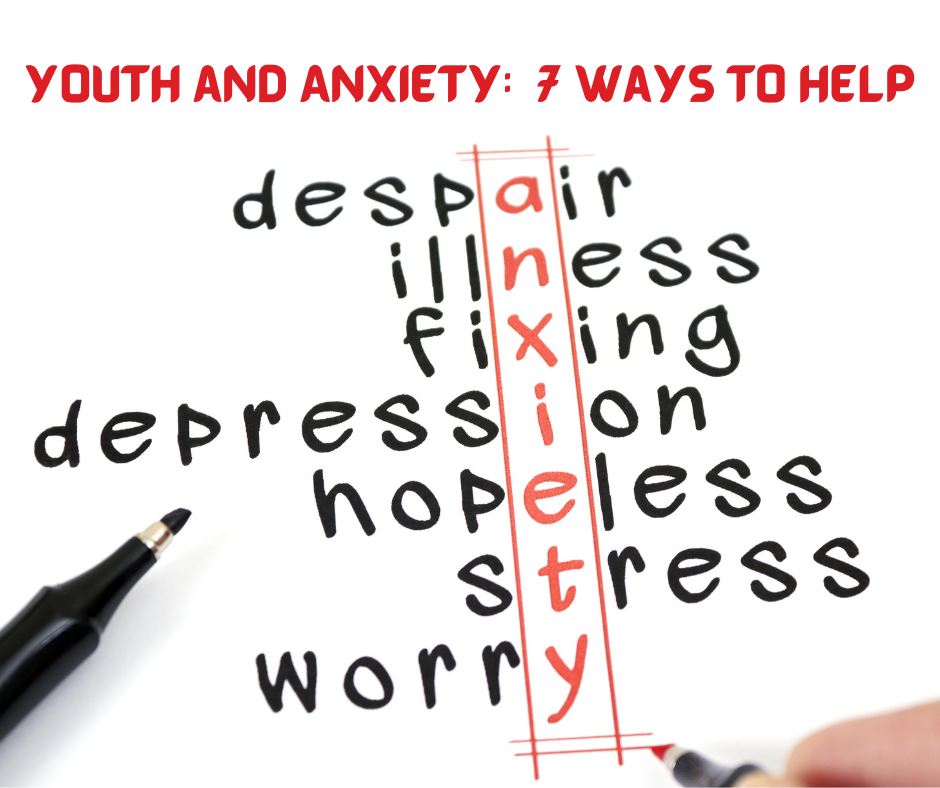
Your Child Feeling Anxious? There are Skills that can be Learned to Help Manage these Feelings and Prevent them from Interfering with Life.
This awareness campaign is brought to you in partnership with Empower Tusc.
Many of these skills are things we should learn also to manage daily life stressors. In general, the goal is not to eliminate anxiety altogether, but to help kids learn to manage their experiences and get through a difficult situations or to see things in a more balanced way.
Here are 7 Suggestions for parents to Help Your Anxious Child:
-
Be accepting of a child’s concerns
- Gently correct misinformation about a situation and give them encouragement.
- Help them do something in small steps until they are less nervous about it.
-
Don’t avoid all things that cause a child anxiety.
- Avoid typical (safe) activities that cause anxiety, the more kids learn avoidance is a good strategy.
- In learning to manage difficult situations, kids will start demanding to avoid more and more situations, and this can become their main strategy.
-
Be realistic, and don’t make promises.
- Don’t make a promise to your child that you can’t keep. Like you will never be injured riding a bike, or they will never fail a test, or there will never be an embarrassing social situation.
- Express confidence they’ll be able to help their child through any challenges that come along, and that they’ll feel less nervous the more they practice something new.
- Use other examples of things your child has mastered in the past.
-
Be accepting of their feelings.
- Avoid making them feel bad for being anxious.
- Acknowledge their feelings and talk about how you are going to help them: “I can tell you’re feeling nervous about trying to ride your bike, but I’m going to be there next to you to help you learn how to do it.”
-
Teach them to evaluate the evidence.
- The older children get, the more they become able to think through complex situations.
- Teach them to compare the evidence for and against their anxious thoughts.
- Many times, anxious thoughts get in the way of thinking through the reality of a situation.
-
Don’t lead them to anxiety.
- Well-intentioned adults ask questions or make statements:
- “Are you worried about passing that test today?”
- “Are you scared of going to the doctor today?”
- “You must be really worried about that performance coming up.”
- Instead, try asking more neutral questions.
- “Are you feeling ready for your test?”
- “How are you feeling about the performance later this week?”
- If they express some worry after that, offer to help them problem-solve.
- Well-intentioned adults ask questions or make statements:
-
Model healthy ways to manage anxiety.
- When adults provide good modeling of ways to manage anxiety, it shows kids they can do it too.
- Tell the kids around you about the times you feel nervous and how you are getting through it.

For more helpful articles on how to help your anxious child or youth with mental health visit On Our Sleeves.