Cancer affects 1 in 3 people in the United States.
As February is National Cancer Prevention Month, we want to shed light on some ways to avoid the big C. There is no definite way to prevent cancer. However, we do know that there are some choices we can make that may play a hand in keeping us healthy and reducing our risk.
These tips for reducing your risk of cancer are brought to you in partnership with the Tuscarawas County Health Department.
Risk reducing lifestyle habits..
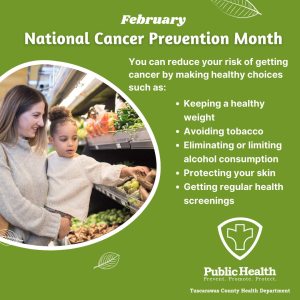
According to the American Cancer Society, at least 18% of cancers diagnosed in the US are related to preventable factors. These factors mostly come down to lifestyle choices. Let’s talk about some healthy lifestyle choices and habits that can reduce your risk of cancer.
- Eating a balanced, nutrient dense diet. Find suggestions for healthy foods to stock your fridge and pantry here.
- Staying active. Move your body frequently even if it’s just dance parties in the kitchen or evening walks to get the blood pumping. Traditional exercise isn’t for everyone and that’s okay. Find something you and your family can enjoy that keeps you all moving.
- Being mindful of UV ray exposure. Excess exposure to UV rays is known to increase the risk of skin cancer. Sunscreen and UV protective clothing/hats protect your skin from that harmful radiation in the sun.
- Avoiding smoking. Smoking is the leading cause of cancer. Avoid smokig at all costs. For more information on the effects of tobacco and support in quitting, check out this article: Health Effects of Tobacco- Newsymom
- Limiting alcohol consumption. A drink or two every once in a while is just fine.. but the more you drink, the higher your risk of certain cancers becomes.
- Getting enough sleep. Adults need at least 7 hours of restful sleep each night. Prolonged sleep issues have been linked to increased risk of cancer. Chronic sleep difficulties such as snoring, sleepwalking and insomnia should be addressed with a medical professional.
Environmental and occupational safety..
Be aware of your environmental and occupational risks. Regular exposure to certain chemicals can dramatically increase the risk of cancer. Be sure to follow guidelines and wear protective gear whenever applicable in the workplace.
For information on some known human carcinogens click here.
Additionally, consider having your home tested for Radon. Radon is a naturally occurring gas that is linked to lung cancer. Testing your home and treating radon leaks is an important way to reduce your entire families’ risk.
For more information on radon, check out this article: Protecting your Family from Radon- Newsymom.
Regular screening..
Some regular screenings include..
- Mammograms- for breast cancer
- Colonoscopies- for colorectal cancer
- Pap tests and HIV screening- for cervical cancer
- And more..
When it comes to cancer, prevention efforts and early detection are key. Talk to your medical provider to discuss your risk levels and what screening may be recommended for you.
If you’re in need of a medical provider, the medical office at the Tuscarawas County Health Department is always accepting new patients. Call (330) 343-5555, ext. 1810 to make an appointment.
Citations: https://www.cancer.org/cancer.html
https://www.cancer.gov/about-cancer/coping/feelings/stress-fact-sheet